Thinking in React: Advanced State Management
So far, state management was about giving each piece of state the right home:
When to use state
Types of state (accessibility): local vs. global
In this chapter, the following topic are discussed:
Types of state (domain): UI vs. remote
Where to place each piece of state
Tools to manage all types of state
The when and where to use state still apply.
Types of state
State types are categorized in terms of accessibility**and its **domain:
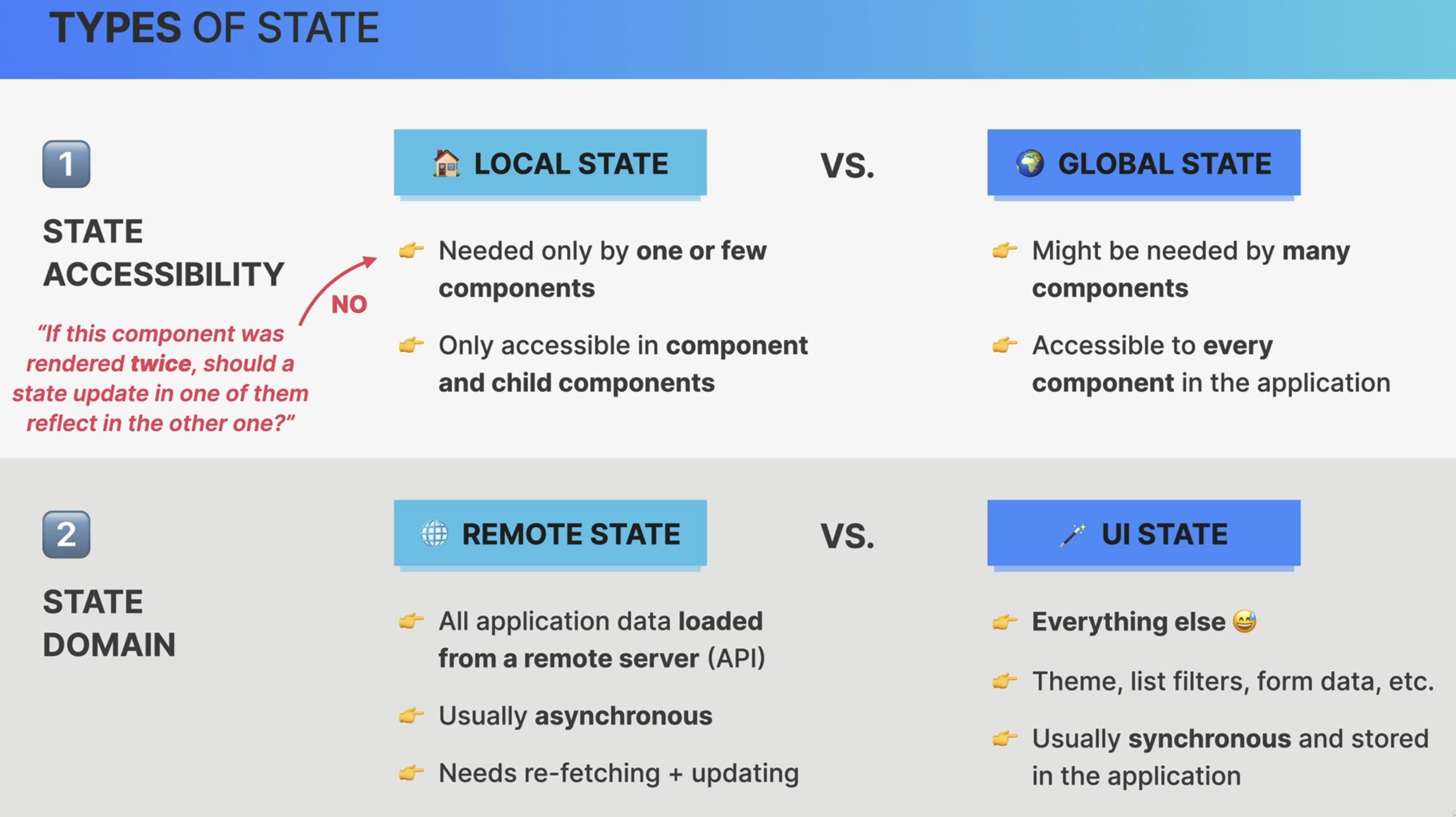
Types of state
Remote state is commonly loaded via an API call, therefor is usually fetched asynchronously and might be re-fetched and updated frequently (as something changes in the backed)
Remote state and UI state are managed totally different
Remote state requires specialized tools to manage
UI state is commonly synchronous, without API calls and stored inside the React application (e.g. using
useStateoruseReducer)
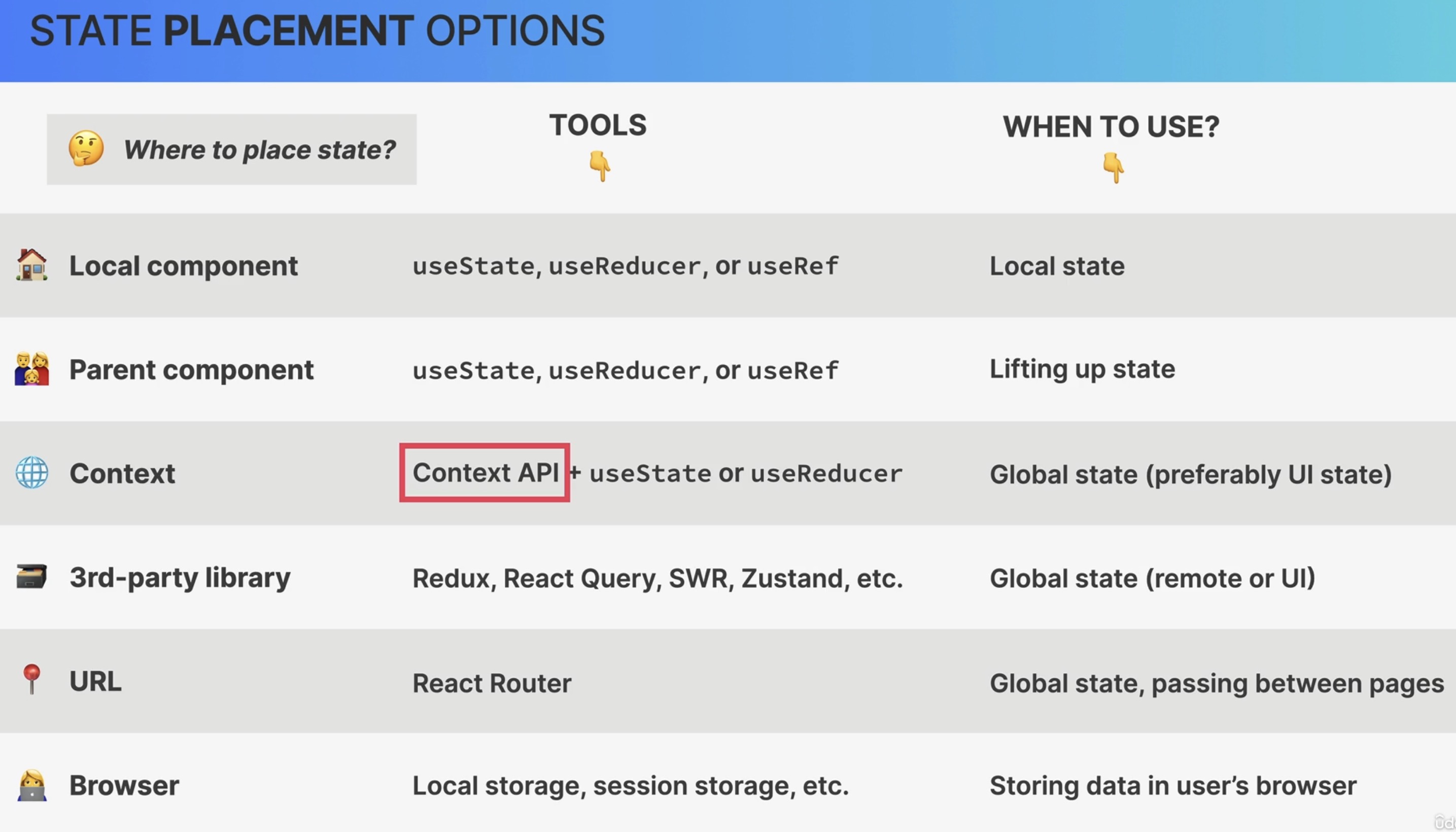
State placement options
Altogether there are six options:
State management tools options
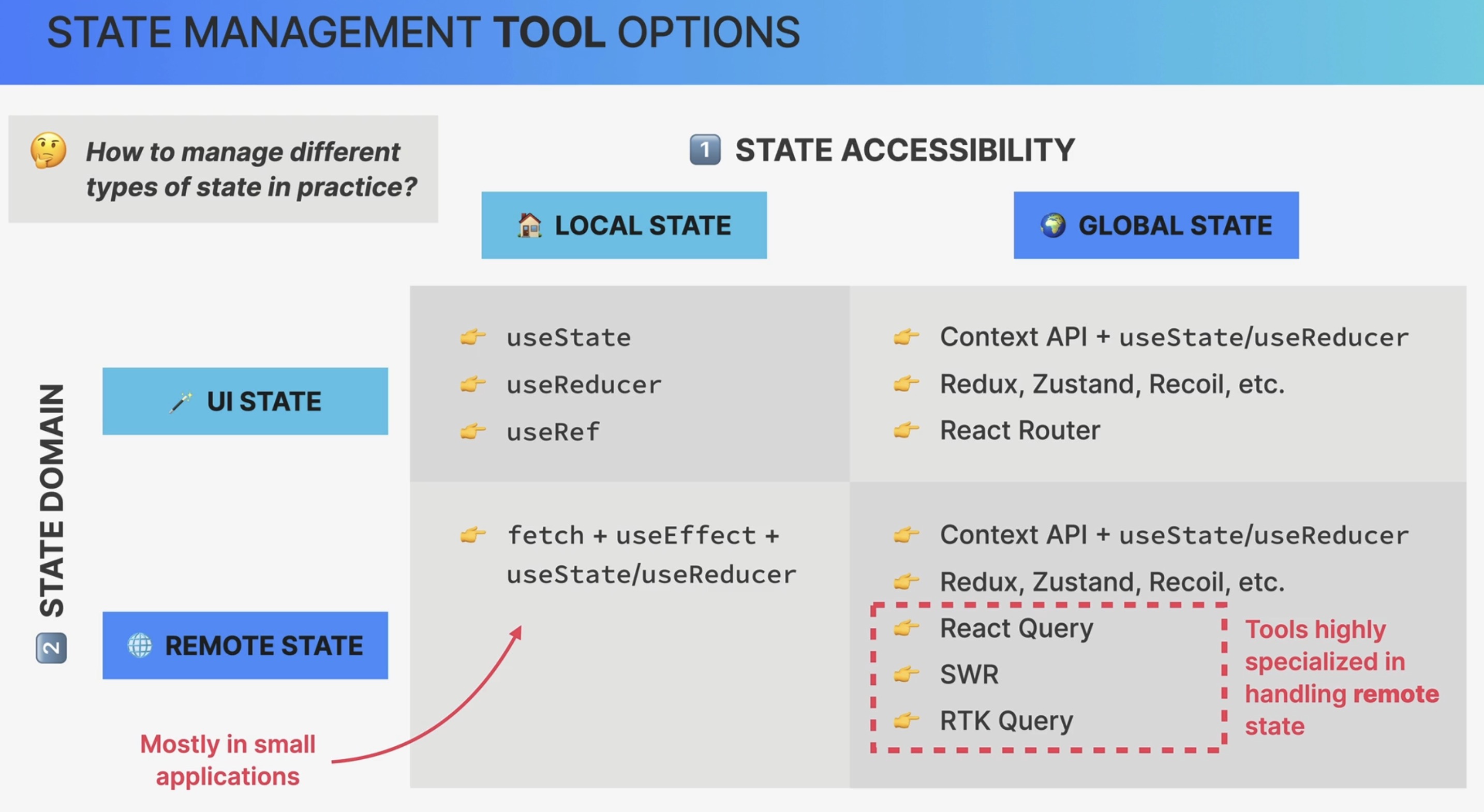
In larger applications remote local state is handled globally, so it is treated the same as remote global state
specialized tools on remote global state handle the asynchronous nature of the state and keep the state in-sync with the remote data